
The Ivy Lee Time Management Method and Why It Works

Throughout the years, time management has accumulated many rules and tricks. As a result, there are many proven methods of time management techniques that we use today that appeal to your work type. For example, problem solvers and analytical thinkers may use the Pareto Principle or the Time Blocking Method. Creative thinkers will do well with the Pomodoro Technique, while critical thinkers may thrive using the Eisenhower Matrix. But only one method boasts simplicity and has stood the test of time and efficiency: The Ivy Lee Method.
What is the Ivy Lee Method?
The method goes back to 1918, when Charles Schwab, president of the Bethlehem Steel Corporation, sought help with making his team more efficient. So he scheduled a chat with Ivy Lee, who was a respected businessman and productivity consultant.
Lee agreed to help, free of charge. His only request was to spend 15 minutes with each of Schwab’s executives. Then, he said if the method worked within three months, Schwab could send him a check for whatever he thought the process was worth. Fast forward three months, and the method, although simple, was worth $25,000 in Schwab’s eyes, saying it had been the “most profitable advice he received.”
Ready to see the steps for this incredibly simple but powerful time management technique?
The Steps
Step 1:
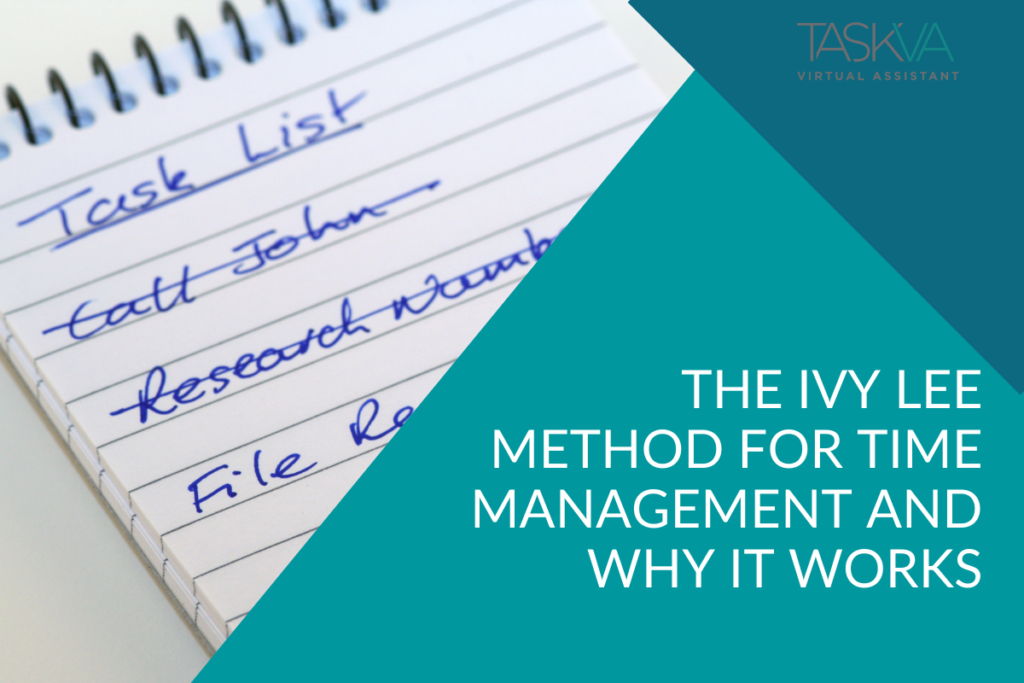
At the end of each workday, write down six tasks you think are essential to accomplish tomorrow.
Step 2:
Decide priorities for each of those tasks, ranking them in order accordingly.
Step 3:
First thing tomorrow, get started on the first task. Work on it until you finish and then begin the second task. Continue to work through your list, one task at a time.
Step 4:
When you finish your day at work, look at your list. Move any unfinished items to tomorrow’s list of 6 tasks for the day.
Step 5:
Repeat this method every day of the workweek.
Why it Works
As I said, this method is simple, which is precisely why it works so well. With cell phones, social media, and all other forms of advanced technology, we’ve become activity addicts. As a society, we’re often restless and antsy to do a million things at once, multi-tasking.
We used to believe that multi-tasking was the most effective way to work. But neuroscience has now proven that it is the exact opposite. We get less done in more time and end up frazzled at the end of the day. It can take our brains up to 25 minutes to get back into a work rhythm after we’ve been interrupted. When we multi-task, we switch quickly between tasks and never get into a rhythm, which kills our productivity and stresses us out needlessly.
The Ivy Lee Method is straightforward and goal-oriented. It keeps you on track so that multi-tasking and distractions do not interfere with the important stuff. It provides you will the kind of laser-focus that will help you get through your work tasks without breaking a sweat.
Want to learn more about prioritizing your tasks and get more done in less time?
Our FREE workbook along with the complete time management series will help you take control and manage your time.
[download_after_email id="2240"]
Part I – What Is Your Time Vampire
Part II – 12 Steps to Vanquish Your Time Vampires
Part III – Improve Focus and Productivity for Better Time Management
The Ivy Lee Time Management Method and Why It Works Read More »



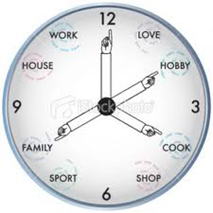 When you think of a successful CEO, do you wonder how they make it look so easy? How did they get where they are? It almost seems a fantasy that someone can run a company, spend time with family, exercise every day, yet still manage to enjoy their hobbies as well, such as writing a book, or building a boat. You know the kind of person we’re talking about because there are loads of these successful people out there. Do you want to know how they do it? What is their secret formula?
 Steve Jobs wore the same outfit every day so that he didn’t have to mull over a bunch of wardrobe options every morning. Barack Obama limits his outfits to gray or blue suits. Nick Taranto used to only wear shoes without laces, so he didn’t have to tie them. Keep a diary of all your repetitive daily tasks; which ones require a decision or take a little time? Can you narrow the choices down, or eliminate altogether? You may think that trivial decisions only take seconds away from your time, but those are seconds you’ll never get back.
 They are almost always a waste of time. Most things can be handled via email today, but if you really need to schedule a meeting, have a streamlined agenda and a time limit for the meeting – and stick to it! Otherwise, migrate your meetings to an email chain or work chat platform like
  This sounds like a no-brainer, but you’d be surprised at how much time is wasted unnecessarily. If you’re waiting in line, check off some of your task items, or when you’re driving, listen to a podcast or audiobook that will teach you something new to implement into your life. To put it simply, train your brain to always be productive.
 Want to learn how to spot a phishing email? Read this: