Productivity & Time Management

Tips and systems to help entrepreneurs stay focused, manage their time wisely, and eliminate the daily chaos that slows business growth.

time management

7 Strategies For More Productivity

7 Strategies For More Productivity (and why they work!)
time management
virtual assistant

One of the most difficult things about planning your day effectively is prioritizing your daily goals. With so many things that we want to accomplish each day, it can be tough to decide where to start. I’ve put together eight different strategies and why they work. Choose the best one for you, or mix them up. There is no right or wrong way as long as you make the most of your time and achieve your goals!

The Warren Buffet Strategy

This strategy has three steps:

Step 1: Write down your top twenty-five goals. These could be career goals, personal goals, weekly goals, annual goals, etc.)

Step 2: Go over your list and circle your top 5 goals. Make sure to take some time with this part; don’t rush it!

STOP – Do NOT proceed to Step 3 until you have first done the two steps above.

Step 3: Now you essentially have two lists: the circled items are List A, and the remaining items are List B. So logically, the next thing to do is start on your most important tasks. Well, not exactly. Here’s the catch – Buffet says this, “Everything you didn’t circle just became your Avoid-At-All-Costs list. No matter what, these things get no attention from you until you’ve succeeded with your Top 5.” For Step 3, you only want to focus on working on the items on List A.

Why it works:

Eliminating things you care about is the most difficult part of this productivity method. Those twenty items on List B are things you care about, just like the items on List A. They are tasks that important to you for one reason or another. It’s super easy to tell yourself that you’re being productive while spending time on those twenty tasks. But when you hold them up to your top five goals, those other tasks are simply distractions from your biggest goals. Spending your limited time on secondary priorities may just be the reason you still have twenty half-completed projects instead of five finished ones.

The Ivy Lee Strategy

Step 1: At the end of each day, jot down the six most important tasks you must accomplish the next day. ONLY six. Don’t write more than that. These can be work or personal tasks. (You could actually do a separate list for both!)

Step 2: Prioritize those six tasks in order of how important they are and how much they will impact your end goals.

Step 3: The next day, when you start working, focus ONLY on the first task. Work on it until it is finished before you move on to the next item on the list.

Step 4: Continue down the list, marking off each item as you complete it. Remember, you prioritized this list yesterday, so there’s no need to jump around between tasks – stick with the priority order you already lined up.

Step 5: At the end of the day, move any tasks you didn’t complete to a new list of six tasks for the next day. This is also a good time to re-evaluate each item and decide if it’s really one of the most important tasks you need to complete.

Step 6: Repeat this process every day (or every working day)

Why does it work?

Simply put, it works because it’s simple. This strategy requires you to make hard decisions. Trimming the fat is one of the best things you can do when your brain is full of ideas or you feel overwhelmed by your to-do list. It forces you to get really serious with yourself when you focus on eliminating those tasks that aren’t absolutely necessary. We all have a myriad of things we’d like to do, and we may even consider many of those things to be tasks we must do. But the truth is that imposing limits on yourself can make you a more productive person. If you try to do everything, you usually get nothing meaningful accomplished.

This strategy also eliminates the friction of starting. For most people, getting started is the biggest hurdle! Creating your prioritized list the day before allows you just to sit down and get to work the next day without spending hours waffling back and forth about what to work on. Just getting started is as important to your success as finishing.

Finally, effective productivity strategies require focus, and this strategy works because it gets rid of multi-tasking. As much as people like to think they are multi-tasking machines that can accomplish all the things at once, science says otherwise. Multi-tasking has been shown repeatedly to be inefficient. You can’t do great on the task when your attention is divided a million ways.

The Anthony Trollope Strategy

This strategy is even more simple than the others. Trollope simply did the following:

Step 1: Set a timer for 15 minutes.

Step 2: Write 250 words before the timer goes off.

Step 3: Repeat 12 times throughout the day for a total of 3 hours.

With this simple method, Trollope completed 47 novels, 18 non-fiction books, 12 short stories, and 2 plays, in addition to multiple articles and letters.

This division of time allowed me to produce over ten pages of an ordinary novel volume a day, and if kept up through ten months, would have given as its results three novels of three volumes each in the year…” —Anthony Trollope

Why does it work?

Anthony Trollope was an author (obviously), and writing a book is a pretty big project. It’s impossible to complete in one sitting, much less one day. So instead of tracking progress by how many books or chapters he wrote, Trollope simply aimed for 250 words in 15 minutes, multiple times a day. This made him feel accomplished and successful each day because, even though he wasn’t writing an ENTIRE book that day, he was completing 3,000 words towards the overall project daily.

Measuring progress in smaller increments helps you to keep the momentum going throughout a bigger task. And more momentum means more progress, which means even more tasks will get completed overall. This strategy applies to any big projects, not just writing ones. Think about how you can break your tasks out into highly productive, 15-minute segments throughout the day.

The quicker you finish a task and check it off of your to-do list, the faster you will feel like you are being productive and effective each day. This early win can be a crucial part of keeping your attitude upbeat, and your drive going as you complete the remainder of your tasks throughout the day.

Simply put, Anthony Trollope’s strategy allows you to get the immediate payoff of finishing a task quickly and the long-term value of working on your most important goals.

The Eisenhower Matrix Strategy

The Eisenhower Matrix strategy uses a decision matrix to help you prioritize the tasks on your to-do list. There are four different categories: urgent and important, important but not urgent, urgent but not important, and neither urgent nor important.

Urgent and important – these are tasks you need to do right away

Important, but not urgent – these are tasks you should schedule to do later

Urgent, but not important – these are tasks you can (and should!) delegate to someone else

Neither urgent nor important – these are tasks that you should just remove from your to-do list completely

As you start each day, it’s important to look back at the previous day’s matrix to see what urgent and important tasks you didn’t complete. Those need to either be at the top of your list for the day or decide if you can delegate them right away. Or they aren’t as urgent as you initially thought, and you can move them to the section of the matrix for later scheduling. Remember, urgent tasks are those you need to react to or take action on right away, whereas important tasks help you reach your long-term goals.

Why does it work?

One of the best things about the Eisenhower Matrix is that you can use more than one for bigger plans (weekly, monthly, etc.) and for smaller daily tasks as well. The other great thing about it is that you can use it to help you make decisions and prioritize over and over.

But what really makes it shine? The Eisenhower Matrix requires you to make tough decisions about your goals and all the tasks on your plate. The secret is the fourth quadrant of the matrix, the tasks that are not important or urgent.

Too often, we equate busyness with productivity, and that is not the case. In fact, the fastest way to get something “done” is to eliminate it entirely. This strategy allows you to regularly evaluate each task and ask yourself, “Do I really need to be doing this?” It takes a little more thought and effort, but the time and energy you save on those eliminated tasks will be well worth it!

The Essentialism Strategy

Essentialism, at its core, is about discernment in how you make decisions – with a slow, carefully considered “yes” or a quick, decisive “no.” It’s about recognizing all of your responsibilities and homing in on what is most essential to you. Being more intentional about your choices will give you more control over your daily life and, therefore, more time and energy available for productivity.

Step 1: Write each task down on a separate piece of paper (like a sticky note).

Step 2: Look at everything you have written before you and ask yourself, “If I could only keep one of these, which would it be?” Place the chosen task’s paper face down.

Step 3: Repeat Step 2 again with the remaining tasks. Once you’ve selected one, place it face down on top of the first task you selected.

Step 4: Repeat until all the papers are in one stack.

Step 5: Flip the stack over and work from the top, as you’ve just prioritized your to-do list!

Why does it work?

Saying “yes” to everything (or making no decision at all) means giving up your choice and losing control. Your purpose is greater than just being someone else’s workhorse. When you don’t make your own choices, you can’t work towards where you want to be, in either work or life. This often results in being overextended, stressed, frustrated, and less effective. Practicing discernment and saying “no” more frequently can take some work, but it gets easier as you go.

Personal Kanban Strategy

Personal Kanban is a system based on Lean manufacturing principles but applied on a personal level. Personal Kanban only has two rules: make your list visual and limit your work-in-progress (WIP). It’s a strategy that anyone can use, regardless of their situation, age, or learning style. Its visual nature is also great for those struggling with figuring out where to begin working on daily tasks.

Step 1: Create a board or poster with three columns: To-Do, In Progress, and Complete.

Step 2: Make a sticky note (also called a “card”) for each thing you need to complete.

Step 3: Add each sticky note to the To-Do column.

Step 4: Label each sticky note task as high, medium, or low priority

Step 5: Choose 2-3 tasks, place them in the In Progress column, and get to work.

Step 6: Move it to the Complete column as you complete each task. Then take another task from the To-Do column and move it over to In Progress.

Step 7: Rinse and repeat.

Why does it work?

Personal Kanban gives you a visual system to prioritize your tasks to promote balance and productivity. People often overextend themselves or bounce between unfinished products, so having a visual reminder of the In Progress tasks helps keep you on track and focused. Make sure to always move a new task into the In Progress column as you complete other tasks. This ensures that you will have a steady flow of tasks, which leads to increased productivity and effectiveness. It’s also a great way to keep you focused on only 2-3 tasks at any given time, helping prevent overwhelm and burnout.

The Attention Span & Energy Strategy

This strategy utilizes block scheduling to maximize your most productive times during the day. Your attention span and energy levels greatly impact productivity and distractibility. Focusing on harder and more time-consuming tasks during your most alert and productive hours will yield much better results.

Step 1: Evaluate your current calendar/schedule – Start by tracking how you spend your time for a week. Include every activity (even the mindless social media scrolling!) and how much time you spend on each thing. Once you have a better idea of how you are spending your time, it will be much easier to create a new, more efficient schedule.

Step 2: Look for patterns – Review your activities from the previous week and group the tasks into categories such as meetings, creative work, email, social media, household tasks, family time, etc. Alternatively, you can categorize tasks based on how you feel while doing them or how they impact your energy levels on a scale from 1 to 10. Any method will work; it’s all about what makes the most sense for you.

Step 3: Organize your time blocks – Use the categorization in Step 2 to help you lay out blocks of time throughout the day. Be sure to plan the most intensive tasks during your high-energy times. You may have to play around with the schedule to find what works best for you, but here’s an example for inspiration:

8:00-9:00 am – Check and respond to emails
9:00-10:00 am – Marketing tasks
10:00-10:15 am – Snack/walk break
10:15 am-10:45 am – Fold laundry and clean bathrooms
10:45-11:45 am – Phone calls
11:45-12:15 pm – Lunch/walk break
12:15-1:00 pm – Prep things for dinner
1:00-2:00 pm – Outsourcing check-ins/assignments
2:00-2:30 pm – Customer support tasks
2:30-3:30 pm – Graphic design work
3:30-4:00 pm – Evaluate today’s progress and create a schedule for tomorrow

Bonus Tip: Create day themes – some people find that switching gears during the day causes them to get distracted and lose focus. If that’s the case for you, try day themes instead. Monday can be marketing day, Tuesday can be a creative workday, etc. If you choose to go this route, be sure to schedule in a family/rest day as well to rejuvenate yourself.

Why does it work?

Block scheduling can be a great tool to combat procrastination. When you know you only have 30 minutes to get something done, staying focused and on task is much easier. It’s also a good way to get a better grasp of how much time it takes you to complete different tasks. We tend to underestimate how long things will take to complete – using a block schedule for a few weeks will give you a better idea of how much time you really need to complete things. Finally, when your schedule doesn’t allow space for mindless tasks like chatting with friends or scrolling social media, you’ll find it much easier to pay attention to the task at hand.

And finally, Newton’s Third Law of Motion says,

“When one body exerts a force on a second body, the second body simultaneously exerts a force equal in magnitude and opposite in direction on the first body. (Equal and opposite forces.)”

When it comes to enhancing your productivity and efficiency, you have two paths to choose from. The first path involves amplifying your productive forces; however, this can sometimes lead to exhaustion and burnout. The second path, and perhaps the smarter one, is to concentrate on removing the unproductive forces from your life. Think of it as clearing away the clutter on your path to success. By doing so, you will reduce stress, lighten your load of responsibilities, embrace a healthier lifestyle, and set clear boundaries. It's all about dismantling the barriers that obstruct your progress.

If you're ready to take a proactive step towards reclaiming your productivity and achieving more, consider the immense benefits of hiring a virtual assistant. By entrusting time-consuming tasks and administrative burdens to a skilled VA, you'll free yourself to focus on your core strengths and passions, boosting your productive forces without the risk of burnout. It's a strategic move that can help you eliminate those unproductive forces from your work-life equation, propelling you toward greater efficiency and success.

Take action today and discover how a virtual assistant can be the missing link in your journey to enhanced productivity. Let's chat and explore the possibilities together.

7 Strategies For More Productivity Read More »
procrastination

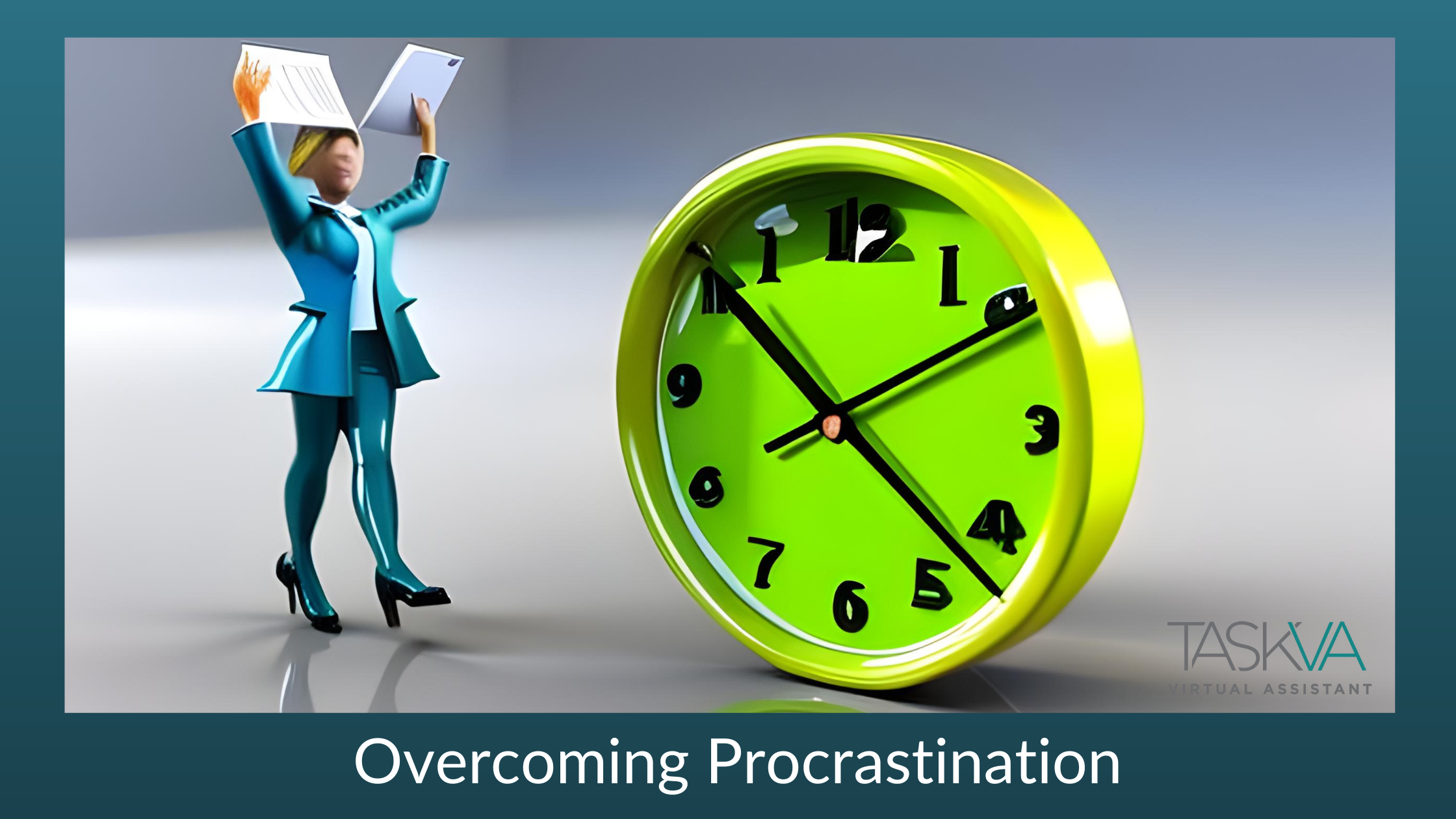
Overcoming Procrastination: Unleash Your Business’s Full Potential

procrastination

Overcoming Procrastination: Unleash Your Business's Full Potential

virtual assistant

Picture this: you've got a big project due, a game-changing idea waiting to be executed, and a task list that seems to have multiplied overnight. Yet, there you are, scrolling through your social media feed, reorganizing your desk for the umpteenth time, or suddenly developing an intense craving for a snack. Ah, procrastination, you sly little trickster.

But let's get real for a moment. Procrastination might feel like a harmless indulgence, a way to escape the pressure of looming tasks temporarily. But in the world of business, it's like playing with fire. When you consistently put off important tasks, you're delaying your progress, missing out on opportunities, and sabotaging your growth.

Think about it – missed deadlines can damage your reputation, hinder team collaboration, and even lead to financial losses. Not to mention that brilliant idea you've been sitting on? While you're procrastinating, someone else might swoop in and turn it into the next big thing. Trust me, the dangers of procrastination are real, and they're not to be taken lightly.

Ready to banish procrastination? Below are seven tips on how to kick procrastination to the curb and supercharge your business game.

Break It Down: One of the biggest reasons we procrastinate is because tasks seem overwhelming. The secret sauce? Break them down into smaller, manageable steps. The task will feel less daunting, and you get a sense of accomplishment with each mini-victory.

Set SMART Goals: Define your goals with precision - Specific, Measurable, Attainable, Realistic, and Time-dependent. When you have a crystal-clear vision of what you're working toward, staying focused and motivated is more manageable. Remember, a ship without a destination is just afloat in the sea.

Prioritize and Time Block: Not all tasks are created equal. Prioritize your task list and use time-blocking techniques for each task. It's like making appointments with yourself to ensure nothing falls through the cracks.

Eliminate Distractions: Your social media feed, the irresistible call of the fridge, or that sudden urge to tidy up – distractions are procrastination's best friend. Identify your triggers and create a dedicated workspace that minimizes these distractions.

Reward Yourself: Positive reinforcement works wonders! Set up a reward system for yourself. Complete a task? Treat yourself to something you enjoy.

Responsibility Ally: Share your goals with a friend, mentor, or colleague who can hold you accountable. Knowing that someone is checking in on your progress can light a fire under you.

Mindset Makeover: Change your perspective on tasks. Instead of dreading them, focus on the satisfaction and growth that comes from completing them. Remember, you're building a legacy here!

Say farewell to procrastination and welcome productivity with open arms. Your business reflects your dedication, drive, and determination, so why settle for less than your best? Implement these tips, stay focused, and watch your business soar into a remarkable success story!

Want more tips on boosting productivity and building a business empire? Head over to The TaskVA Library for a treasure trove of wisdom to fuel your journey!

Overcoming Procrastination: Unleash Your Business’s Full Potential Read More »

focus, goals

7 Powerful Tips to Stay Focused On Success

7 Powerful Tips to Stay Focused On Success

virtual assistant

Does this sound familiar: You start the day with a goal – Stay focused and get through your task list. Fast forward to 5 o’clock, and it seems your day has disappeared! You’ve been at your desk for eight hours, and your task list does not have one item crossed off! Distractions today make it challenging to stay focused - social networking, computer games, television, mobile devices, Tik Tok! Even if you don’t give in to those distractions, there are life distractions - kids, household chores, errands. So with all these distractions, how do you stay focused on success?

With the right mindset and strategies, you can stay focused and resolute on your path to achieving greatness. Below are seven powerful tips for maintaining your focus on success.

Set Clear Goals and Prioritize: Start by setting clear, achievable goals for your business. Break them down into smaller, actionable steps. Prioritize these tasks based on their impact and urgency. By having a well-defined roadmap, you will have a sense of direction and be more focused on what matters most.

Positive Affirmation

I am laser-focused on my goals, and each step I take brings me closer to success.

Create a Daily Routine:  Establishing a daily routine can work wonders in maintaining focus and productivity. Allocate specific time blocks for essential tasks, including planning, strategizing, networking, and actual work. Stick to this routine diligently, as it helps build a sense of discipline and consistency.

Helpful Advice: Routines provide structure and stability, empowering us to make steady progress toward our dreams.

Embrace the Power of No:  As an entrepreneur, you will encounter numerous opportunities, collaborations, and projects. While it may be tempting to say yes to everything, it’s crucial to learn to say no to distractions that deviate you from your primary objectives.

Positive Affirmation

I confidently say no to distractions and remain focused on my path to success.

Limit Distractions and Set Boundaries:  Identify your biggest distractions and take proactive steps to limit their impact. It could be excessive social media use, unproductive meetings, or a cluttered workspace. Additionally, set boundaries with friends and family during dedicated work hours to maintain focus.

Helpful Advice: Create a focused environment, free from distractions, allowing unhindered focus on our business.

Develop a Growth Mindset:  View challenges and setbacks as opportunities for growth and learning. Embrace the idea that failures are stepping stones toward success. A growth mindset fosters resilience and enables you to stay focused, even during tough times.

Positive Affirmation

I am adaptable and resilient, and I see every obstacle as a chance to learn and improve.

Seek Support and Mentorship:  Surround yourself with like-minded individuals who understand the "CEO" journey. Join networking groups, attend seminars, and seek mentorship from experienced accountants and other small business owners. Having a supportive network will keep you motivated and on track.

Helpful Advice: Actively seek support from mentors and peers, know that success thrives in a community.

Take Breaks and Practice Self Care:  Remember to take breaks and recharge regularly. Burning out will only hinder your progress. Engage in activities you enjoy, exercise, meditate, or spend quality time with loved ones. A rejuvenated mind is more focused and productive.

Positive Affirmation

I honor my well-being and take breaks when needed, knowing that it enhances my productivity and creativity.

Staying focused on your journey is vital to your success. Embrace the power of clear goals, daily routines, and the ability to say no to distractions. Cultivate a growth mindset, seek support from a like-minded community, and prioritize self-care. Integrating these strategies into your entrepreneurial life will pave the way for prosperity and fulfillment on your path to success. Remember, focus on the destination and enjoy the journey, for it is the process that shapes the greatness within you.

Not sure where your time is being spent? Download our FREE Time Management workbook and learn:

✓ How to identify things that waste your time

✓ How to determine what is getting done and if it's the right things

✓ How to better organize your priorities

✓ How to plan your days, weeks, and months to reach your yearly goals

✓ How to improve your focus and productivity

✓ How to stop procrastinating habits and patterns so you get more done in less time

 …and a whole lot more!

7 Powerful Tips to Stay Focused On Success Read More »

productivity

5 Tips to Be Productive Today

productivity

5 Tips To Be Productive Today

virtual assistant
Everyone has had those days; no matter what you do, it's tough to feel productive. When it happens to me, I try not to stress too much but just follow my task list in order of priority and hope I'm not missing anything important! But what happens if one of those days hits you on a day that you absolutely need to be productive? Here are five tips that will help you get going and complete your necessary tasks.

Tip #1:  Give Yourself a Deadline.
It’s easy to put something off when you have an open ended timeline or deadline.  Instead, set a deadline to complete tasks on your list today.  Set a goal to end your workday at a specific time and have everything done before then. A good trick is to add the task to your calendar and give it an allotted amount of time, just like you would a client meeting. Set a 5-minute warning, and if you find you need more time or there will be follow-ups, reschedule it later in the day if you have time available or later in the week if it can wait. This psychological trick will help you to get more done and allow you to have more time to enjoy your life instead of worrying about all you haven’t completed.

Tip #2:  Get Your Body Moving.
Exercise is a four-letter word! Ok, maybe not for many of you, but seriously, I find it a chore, and I will admit, it often finds its way to the bottom of my list! Experts say that by exercising first thing each day, you’ll help your brain to get more oxygen and nutrients, and this boost of nutrition will help boost productivity throughout the entire day.  But if you spend too much of your day sitting, the effect will fade.  So here's my tip, get up every 30 minutes and walk for 5 minutes. Get your body moving. Bonus if you can go outside and soak up some vitamin D at the same time - walk up and down the driveway a few times; if you have stairs, take a few trips up and down the stairs, walk around your office or house - the point is to get at least 5 minutes of movement in (picking up your coffee cup multiple times does not count!) After a day or two of doing this, let me know in the comments how much your productivity picked up!

Tip #3:  Avoid Multi-Tasking.
Many people think that being able to multi-task is a good thing. But in the end, it can actually mean that you’re not focusing on anything.  Believe it or not, the human brain is not designed to multi-task, and by doing so, you are decreasing productivity, and you may not be getting anything done well. It can take our brains up to 25 minutes to get back into a work rhythm after we’ve been interrupted. When we multi-task, we switch quickly between tasks and never get into a rhythm, which kills our productivity and stresses us out needlessly. Instead, carve out specific times for specific tasks and focus only on them (See Tip #1).  The phone and emails are often to blame for taking attention away. Try to set a specific time for returning phone calls and emails.  You may want to schedule several times each day to do this, but don’t leave it open-ended.

Tip #4:  Set a Timer for Tasks.
If you’re struggling to focus on getting something done, try setting a timer to focus on the task and then allow yourself to have a break.  This can help you to break a task into smaller chunks and avoid the paralysis of feeling overwhelmed. For example, I had a pretty big project I was working on. I immediately broke it down into segments and fit it into my calendar, along with my other client tasks. The larger chunks of time, let's say 3 hours, I would set a 45-minute timer. I worked steadily for 45 minutes, then took a 15-minute break. I usually only needed about 10 minutes to stretch, walk around, grab some tea, etc.; the point is, I stayed focused and actually finished this project ahead of schedule! Here's an idea, use the timer trick along with Tip #2 to keep your body moving and your focus going!

Tip #5:  Write It Down.
If you’re the type of person who gets sidetracked with brainstorms of new ideas (raises hand), it’s a good idea to write them down.  Keep a pen and paper handy (or an electronic document file) so that you can write down your ideas. This allows you to put them down so you won’t forget them and get back to what you need to do.  At the end of the day, you can look over your list and decide if you need to do anything with those brilliant ideas instead of taking time away from the rest of your day. My trick? Sticky notes! My desk is full of sticky notes! I'll be working on something, and a new idea pops into my head. I quickly jot it down on a sticky note, post it on my wall, and continue working. I may not always look them over at the end of the day, but I do set aside time once a week to review all my notes and decide which to keep and put into action.

5 Tips to Be Productive Today Read More »

planning success

Client Management Through Daily Planning & Organization

planning success

Client Management Through Daily Planning & Organization

virtual assistant
What do client management and daily planning have in common? For starters, they are two essential skills for any business professional. When done well, these activities can help you stay organized and on top of your work.
Effective client management is essential for ensuring successful productivity. To make sure all of your clients get the attention they deserve, here are some effective strategies you can use for daily planning & organization. Doing this will help you maximize your productivity and ensure swift service to all your clients.


Strategy 1: Establish Clear Goals and Objectives for Each Client

Establishing clear goals and objectives with each client is an important step in building a successful client relationship. Having clearly defined goals ensures that everyone is on the same page and helps to ensure that the project runs smoothly from start to finish. It also allows you to measure progress and success, as well as identify areas for improvement. By setting specific goals with your clients, you can help them achieve their desired outcomes in a timely manner. Furthermore, it will help you build trust with your clients and ensure that they are satisfied with the services provided.


Strategy 2: Use Automation to Your Advantage, Make Your Job Easier

Automated systems can be extremely beneficial for tracking client progress and scheduling appointments. With the help of a calendar app for clients, digital appointment scheduler, and workflow automation software, businesses can save time and money while providing better customer service. Automation also eliminates manual tasks that are time-consuming and prone to human error. By automating these processes, businesses can focus on more important tasks, such as creating content or marketing strategies. Automated systems also allow businesses to track client progress in real time, which helps them make informed decisions quickly. Additionally, automated systems provide an efficient way to schedule appointments with clients without any hassle or confusion.

clickup

Strategy 3: Stay Organized With Technology

Staying organized is essential for productivity and success. Setting priorities and utilizing technology are two of the best practices to help you stay organized. With the right task list manager app, you can easily create and manage tasks, prioritize them using various task prioritization methodologies, and track your progress. This will help you stay focused on what’s important and ensure that you don’t miss any deadlines or important tasks. By utilizing technology in this way, you can make sure that your daily tasks are completed on time and that you remain organized throughout the day.

Client Management Through Daily Planning & Organization Read More »

declutter your desk

Declutter Your Workspace to Boost Productivity

declutter your desk

Declutter Your Workspace to Boost Productivity

virtual assistant

August is the perfect month to declutter! A couple of years ago, I followed Marie Kondo’s advice and completely purged and got rid of everything that didn’t give me joy. It was not an easy path to take, but I will admit, I felt much joy after. The feeling of peace, and weightlessness, was just overwhelming. I’ve never considered myself a hoarder, but I am a “filler”, meaning I have to fill every border space inside my walls.

I had odd tables, chairs, benches, pillows, blankets, baskets, clothes, and of course, my shoes! What possessed me to go through this process? I moved to a much smaller apartment. It was very nice, and I was able to remodel it to fit me, but did I mention much smaller?? I am so grateful for a very understanding landlord!

I had boxes in the building foyer, boxes in my old apartment, and boxes in my new apartment, and he made space for me in the garage.  I knew what I had to do, and it wouldn’t be easy.

First, let me give credit where credit is due. If you ever have to go through a significant purging process as I did, I recommend the Tidy Up process with Marie Kondo. It’s gut-wrenching, emotional, temper-tantrum throwing, but it works.

We’ve tidied up our space, maybe even decluttered our minds in the process, but how about our workspace? When was the last time you saw the top of your desk?

We may not be able to go to the Marie Kondo extreme for our everyday work lives, but I have some tips I have used and still use that I hope will help.

I know There's A Desk Under There...Somewhere

Take an honest look at your workspace. What bothers you the most about it? Is it the stacks of unfiled papers or the empty coffee cups? Visualize how you want your desk to look and write down a list of changes to make it happen.

Start with unfiled papers. Add an inbox where you will place all incoming paperwork. This could be incoming mail, papers you need to review, or work to do. The point is to have one place for all new papers, so you know you have to deal with them.  I have a set of three trays for my inbox, stuff to review, and stuff to file.

As you go through the papers in the inbox, separate the things that need your immediate attention, things that have important dates or contact information, and those that you can handle at another time. Write meeting information in your calendar, add contact information to your address book or card file, and either file the paper where it belongs or get rid of it.

Create a simple filing system to keep important papers. This could include a tickler file you will look at when the day begins. A tickler file is a 31-day system that allows you to place papers you will need for the future. It is a reminder system to ensure you handle future items on time. I use the smaller post-it notes with a drop dead date written on them and stick them on the edge of the paper. This way, I can quickly see what needs my attention. Once you have your system in place, use it daily to keep papers from piling up again

A Place For Everything And Everything In Its Place.

Finally, clear all of the paperwork from your desk, even if it means only stacking it in the inbox so you can see what else you have to do. Clear the desk of all other items and decide to create a specific home for each one. If there are some office supplies that you use regularly, you will want to have them available when you need them. You will want to place anything you do not regularly use in a drawer or cabinet. When you have a place for everything, put each item where it “lives” when it is not in use.

Devote A Few Minutes A Day To Organization

Before leaving, take a few minutes to prepare for tomorrow, and put away things you used during the day. And don't forget to make tomorrow's task list tonight.

Yes, I probably sound like a broken record here, but I cannot emphasize enough how important a task list is – they keep you focused, clear your headspace, show you what your day looks like at-a-glance, and so much more!

If you know me by now, you know I will say, at the end of each workday, set yourself up for the following morning. Before you leave to go home, create your priority list for the next day. But don't stress if you didn’t do it the night before! You’ll get into the habit soon enough. So, for now, set a few minutes aside in the morning and create your list. Put the three most important tasks on the list. These three priorities are the most critical tasks you must focus on.

Once your desk is cleared off, do your best to keep it that way. Take 15 minutes at the end of the day to clear off the desk, so you have a blank slate when the new day starts. Work at keeping your desk cleared for a week before you begin focusing on the cluttered next area of your workspace.

Declutter Your Workspace to Boost Productivity Read More »
distractions

Dealing With Distractions

distractions

Dealing With Distractions

task virtual assistant

In a perfect world, you would be so focused on your work that nothing could distract you. But our world is not perfect, and it rarely works that way. So why does something so minor as an interruption mess up our entire day?

Distractions can be either external or internal. Some distractions are entirely beyond your control, while others are entirely up to you. What they all have in common, though, is the impact on your day. Let’s look at some of these in detail:

Distraction: Overwhelm
Many accountants feel there’s just too much coming at them all at once, most of it needing to be done yesterday. Add in the constant phone calls and never-ending emails, especially during Income Tax season, that seems to need urgent replies, it’s normal to seek escape. Think of it as reacting in a fight or flight way to a scary stimulus. Running to a distraction in this situation is a flight response to stress.

Distraction Buster
Establish your priorities for the day. With most accounting businesses it’s impossible to avoid phone calls and emails that need to be returned, but you don’t have to answer every phone call or immediately respond to every email. Set aside a specific time of day that you’ll handle those replies.

Then, keep distractions down by sending calls to voicemail and shutting down your email window. If this isn't a viable option for your firm, have your virtual assistant monitor the voicemails and emails, and then flag those that need your immediate attention. All others can wait until your designated time.

Distraction: Doing Everything at Once
Multitasking is a huge distraction, simply because it feels productive when you do it. When you multitask, you get less done than you think. Studies have proven people drop up to 20 IQ points while multitasking. This is because the mind is constantly being distracted by every other task you’re trying to do.

You listen to an eBook while exercising but are mentally making a checklist of what you need to do next. You’re on the phone with one person while checking your calendar to reschedule an appointment with another. You’re answering emails while talking to a team member.

It’s everywhere. In the end? How much of that eBook do you remember? What about that phone conversation? Have you really accomplished anything, or do you now need to go back and double-check your work, or worse, re-do it entirely?

Distraction Buster
When you have no guided focus in your day, it’s hard to keep your attention where you need it most. Schedules set out small goals that let you know when you expect to have those goals completed. Without those guidelines, it’s easy for your day to fall apart as minor distractions sneak in to take up blocks of time not meant for anything.

Create your daily task list the night before, don't wait until that morning when you're running late for an early meeting, or already looking at a full inbox of emails. Then, use your list. Complete a task before starting the next. If new projects come up during the day, add them to the bottom of the list. If they need to be moved up, do it at the end of the day, when you're preparing the next day's task list.

Distraction: Out of Resources
There’s only so much attention you can give to a problem before you run out of gas. How are you supposed to keep plugging away when you're tired, exhausted, and worn out? It’s no wonder you welcome distraction just for the relief it gives from having to think or do another thing.

The truth of the matter is, sometimes we just get tired. Consider this, do you find yourself saying "I forgot to eat", or looking at the clock at night and thinking, "if I fall asleep now, I'll still get a couple of hours of sleep", and if so, how often? If we’re not eating or sleeping properly, our bodies start to show signs of fatigue. It’s impossible to tune out distractions when you’re so worn out you can’t think straight.

Distraction Buster
When you don’t want your day to get away from you, grab your calendar, and put things where you can see them. Look at your task list and schedule your tasks (allowing enough time for each), so nothing gets left out or ignored. When you set out a schedule, you leave less room for distraction. Remember to block out time for things unrelated to your goals, such as sleep or time to eat. You’ll be less likely to skip meals or stay up too late if you have these things already in place on your calendar.

Distraction: Too Much Time Staring at a Screen
Wow, it’s easy to get focused on electronics. When you constantly check your phone, it quickly becomes addictive. Literally! Studies have shown time spent staring at screens releases dopamine into your brain, making a little screen time every bit as effective at giving you a quick ‘buzz’ as a hit on a cigarette.

Before you disagree, think about the last time you left your phone at home. How far did you get before you felt a little twitchy about not having it? If you’re like most people, it’s not just your smartphone grabbing your attention. Between laptops, tablets, and every other iteration of device connecting to the internet, it’s no wonder it’s hard to put the screen down and get something done.

Let’s face it, they’re interesting. Filled with apps, connection to friends and family through social media, the ability to check email…there’s just too much to do, and it’s all right there in your hands. It’s no wonder you’re distracted!

Distraction Buster
Again, schedule your screen time, instead of letting it become a distraction. For example, you can plan your lunch break to be a time to relax and do things that take your mind off work. Most smartphones today have a "Do Not Disturb" setting. I have mine set for nighttime, as well as during the day when I need to be completely focused.

Distraction: You’re on a Treasure Hunt
When it turns out you lack the knowledge to continue, falling into the trap of research distraction is very common. What starts as hunting for an answer to a single question breeds diversion and sends you down rabbit trails that keep you from ever returning to the project if you’re not careful.

How many times did you go to one source, but end up looking at something that wasn't even in your original search? With all the information including social media that you can turn to; you can easily waste hours without even realizing it.

Distraction Buster
First, you need to realize you're getting distracted. The minute you notice that your short foray into something has turned into a distraction, stop right there! If you didn't get the answer within a short time - about 5-10 minutes - then this needs to be added to your schedule for further research. Schedule the time for it and make the conscious choice to focus on something else now.

Distraction: What If or How About?
Are you full of ideas? While this is a good thing on many levels, thoughts can also lead to distractions, especially when you start coupling ideas with action.

Moving from one idea to the next, from one project to the next, can feel efficient…at first. In truth, you’re getting less done than you think. Imagine a job involving the remodeling of a house. Say you need to update the kitchen, want to renovate the bathroom, are building a front porch, and painting the dining room. You might think you’re being efficient if you’re doing all projects at the same time. After all, that means you’ll be done at once and have a great house to live in…right? Now imagine finding other home repair jobs as you go and adding to the chaos until the whole place is a mess.

Having too many ideas is very similar. You’re throwing time at first this, and then the next without ever completing anything. You’re adding new things in. In the end, you’re so distracted by so many things to do, that you’ve lost the ability to prioritize, and nothing gets done at all.

Distraction Buster
Keep a notepad nearby so that you can write down ideas that hit you throughout the day and give yourself permission to come back to them later.

Distraction: You’re Trying to Save the World
If a team member is having difficulty working through a return and comes to you for help, do you end up doing their work as well as your own?

If you continuously involve yourself in other people’s problems, it’s hard to get your own projects completed. This ‘save the world’ mentality means distraction comes in the form of altruism, which looks pretty on the outside. Nobel, even. On the inside, though, is the stark truth that you’re distracting yourself under the guise of doing a favor for someone else.

Distraction Buster
While it’s great to want to help and lend a hand now and again, you need to ask yourself if this opportunity is just another distraction? If so, is it one you can afford? Next time, ask the team member to offer you possible solutions to their problem rather than just handing it off to you.

Distraction: You’re Getting Organized
Simply put, you’re not getting anything accomplished, and now you're caught up in the spiral of trying to throw yourself into a new system to fix everything. Organization is another one of those distractions that looks helpful initially. After all, every self-help course is going to recommend cleaning your workspace to make it ‘work better for you.’

The truth of the matter is this kind of organizing can take on a life of its own very quickly. What might start as a quick tidying up suddenly devolves into color-coded notepads, a series of highlighters, and a complex system of calendars. Because it feels like progress, you don’t see it as a distraction. It becomes one when you’re losing out on serious work time as you keep poking at the ‘system’ to make it work.

Distraction Buster
Ask yourself, are you spending more time working on your projects or talking about working on your projects? Handoff the organization to your virtual assistant. Work together to come up with the best tools for your firm, then let your VA set it up and put it into motion.

As you can see, distractions are honestly everywhere, surfacing for a variety of reasons, with a lot of baggage behind them needing to be dealt with if you’re ever going to move forward. You are the master of your fate. It’s up to you to tune out the world and put your focus where it matters most. You really do have the ability to control the situation, whether it’s stamping out the distractions before they gain a foothold, or knowing how to put yourself back on track when the distractions find you.

No matter what, don’t expect easy answers. Nothing here is going to happen overnight. It takes time to build new habits and a new way of thinking. If you fail, simply try again. Give the process time. It will happen.

Dealing With Distractions Read More »

productive people

How Productive People Think

productive people

How Productive People Think

task virtual assistant

Productivity is not just about working hard or being busy. It's about being effective with your time and resources. Productive people are able to focus on what's important and make sure that they are using their time wisely.

A productive person is someone who has the ability to make their own decisions and take action on them. They are able to prioritize tasks, manage time, and set goals for themselves.

So how do productive people think?

Priorities matter

People who are the most productive are clear about their priorities.  They know that some things are more important than others and they’re able to attack the most important things first.

Start each day by making a list of tasks and placing them in order of priority.  This will help you to get the most important things done first and even help you to eliminate tasks that really aren’t necessary.

Understanding priorities also makes it easy to delegate tasks and avoid things that might take away from reaching goals.

Plan for success

Productive people make a plan.  They schedule their next day at the end of the current workday.  This makes it easy to jump right into work the next day without having to take time to decide what’s next on the list.

Eliminate time wasters

There are many things throughout the day that could threaten to take away from productivity.  Productive people know how to put those time-wasters on the back burner and stick to the important work.

It could be social media, chatty coworkers, emails, text messages, phone calls, or reading online news that prevents you from getting business done.  Set those things aside and schedule a specific time when you will allow yourself to participate in those things.

Take responsibility

Productive people are happy to take responsibility for both their successes and their failures.  Rather than looking to point the finger at someone else, they stay accountable for their work.

Learn from mistakes

Productive people have a healthy attitude toward failure and are able to use it as an opportunity for growth. They are not afraid of making mistakes and they learn from them.

The key is to take the time and think about why you failed so that you can learn from your mistakes instead of letting mistakes throw you off course or cause you to quit.

Efficient tools

Productive people also know it’s important to have the right tools to do the job.  That means having a high-quality computer, the proper software, and even the right desk setup.  When you have what you need in your workspace, it helps you to get more done.

If you want to become more productive, it helps to understand how productive people think.  Think about your own productivity levels.  Where can you make changes in your mindset to become more productive?  Small changes can lead to big results.

How Productive People Think Read More »

time management

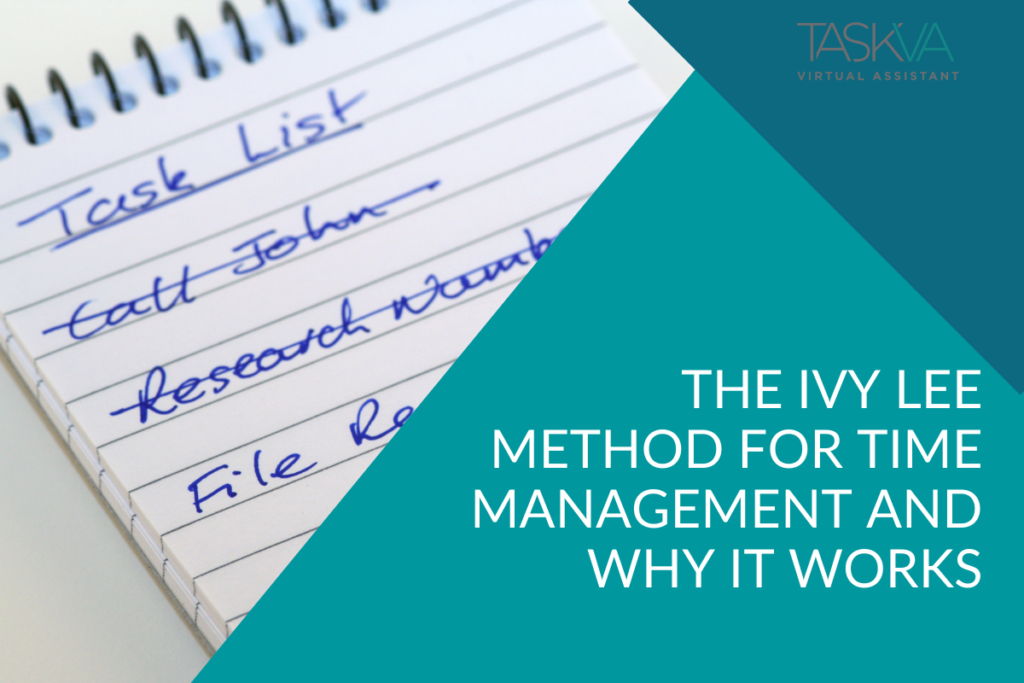
The Ivy Lee Time Management Method and Why It Works

time management

The Ivy Lee Time Management Method and Why It Works

task virtual assistant

Throughout the years, time management has accumulated many rules and tricks. As a result, there are many proven methods of time management techniques that we use today that appeal to your work type. For example, problem solvers and analytical thinkers may use the Pareto Principle or the Time Blocking Method.  Creative thinkers will do well with the Pomodoro Technique, while critical thinkers may thrive using the Eisenhower Matrix. But only one method boasts simplicity and has stood the test of time and efficiency: The Ivy Lee Method.

What is the Ivy Lee Method?

The method goes back to 1918, when Charles Schwab, president of the Bethlehem Steel Corporation, sought help with making his team more efficient. So he scheduled a chat with Ivy Lee, who was a respected businessman and productivity consultant.

Lee agreed to help, free of charge. His only request was to spend 15 minutes with each of Schwab’s executives. Then, he said if the method worked within three months, Schwab could send him a check for whatever he thought the process was worth. Fast forward three months, and the method, although simple, was worth $25,000 in Schwab’s eyes, saying it had been the “most profitable advice he received.”  

Ready to see the steps for this incredibly simple but powerful time management technique?

The Steps

Step 1:
At the end of each workday, write down six tasks you think are essential to accomplish tomorrow.

Step 2:
Decide priorities for each of those tasks, ranking them in order accordingly.

Step 3:
First thing tomorrow, get started on the first task. Work on it until you finish and then begin the second task. Continue to work through your list, one task at a time.

Step 4:
When you finish your day at work, look at your list. Move any unfinished items to tomorrow’s list of 6 tasks for the day.

Step 5:
Repeat this method every day of the workweek.

Why it Works

As I said, this method is simple, which is precisely why it works so well. With cell phones, social media, and all other forms of advanced technology, we’ve become activity addicts. As a society, we’re often restless and antsy to do a million things at once, multi-tasking.

We used to believe that multi-tasking was the most effective way to work. But neuroscience has now proven that it is the exact opposite. We get less done in more time and end up frazzled at the end of the day. It can take our brains up to 25 minutes to get back into a work rhythm after we’ve been interrupted. When we multi-task, we switch quickly between tasks and never get into a rhythm, which kills our productivity and stresses us out needlessly.

The Ivy Lee Method is straightforward and goal-oriented. It keeps you on track so that multi-tasking and distractions do not interfere with the important stuff. It provides you will the kind of laser-focus that will help you get through your work tasks without breaking a sweat.


Want to learn more about prioritizing your tasks and get more done in less time?

Our FREE workbook along with the complete time management series will help you take control and manage your time.

[download_after_email id="2240"]

Part I – What Is Your Time Vampire

Part II – 12 Steps to Vanquish Your Time Vampires

Part III – Improve Focus and Productivity for Better Time Management

Part IV – The Truth About Procrastinating

The Ivy Lee Time Management Method and Why It Works Read More »

Time Management Hacks Used By Successful People

Time Management Hacks Used By Successful People

Time-Mgmt-Illustration-pdf
Add-a-subheading

When you think of a successful CEO, do you wonder how they make it look so easy? How did they get where they are? It almost seems a fantasy that someone can run a company, spend time with family, exercise every day, yet still manage to enjoy their hobbies as well, such as writing a book, or building a boat. You know the kind of person we’re talking about because there are loads of these successful people out there. Do you want to know how they do it? What is their secret formula?

Here are a few time-management hacks from some of the world’s most successful people:

Wake Up Early - Every Day

It’s nice to have some level of structure before a busy day. I don’t know about you, but if I’m rushed in the morning and leave out my morning ritual, my entire day can be off! You set the tone for your day! Waking up early gives you that "self" free time so you can get things done that are important to you. In this YouTube interview with Jocko Willink, former Navy Seal Commander, Casey Neistat explains why it's so important to wake up early every day and have a morning routine that you stick to.

Reduce the Number of Decisions You Have to Make

Steve Jobs wore the same outfit every day so that he didn’t have to mull over a bunch of wardrobe options every morning. Barack Obama limits his outfits to gray or blue suits. Nick Taranto used to only wear shoes without laces, so he didn’t have to tie them. Keep a diary of all your repetitive daily tasks; which ones require a decision or take a little time? Can you narrow the choices down, or eliminate altogether? You may think that trivial decisions only take seconds away from your time, but those are seconds you’ll never get back.

Make Task Lists that you Actually Do

How many loose papers with untouched to-do items have you accumulated over the years? First, stop calling it a “to-do” list. That gives your subconscious  the impression that someone is telling you what to do. I personally don’t like someone telling me what to do, I’d rather it be my idea! So, change it to your task list, or objectives, or goals, anything that motivates you. A friend of mine has a Daily Challenge list. She is quite competitive, joins almost every challenge she sees, and this works out wonderfully for her!

Next, set aside a few minutes at the beginning of your day, every day, to make a realistic list that you will knock out. Make that promise to yourself, and don’t break it.

Reinvent Meetings 

Take it from American businessman and billionaire, Mark Cuban: "The only way you're going to get me for a meeting is if you're writing me a check.” Plenty of successful people avoid meetings like the plague. Why? They are almost always a waste of time. Most things can be handled via email today, but if you really need to schedule a meeting, have a streamlined agenda and a time limit for the meeting – and stick to it!  Otherwise, migrate your meetings to an email chain or work chat platform like Slack.

Stop Wasting Time

This sounds like a no-brainer, but you’d be surprised at how much time is wasted unnecessarily. If you’re waiting in line, check off some of your task items, or when you’re driving, listen to a podcast or audiobook that will teach you something new to implement into your life. To put it simply, train your brain to always be productive.

Turn Your Tasks into Games

Get competitive with yourself. Instead of thinking, “Ugh, I have to get this done by noon,” say, “I bet I can get this done before noon!” If you want to ratchet it up a notch, try using a gamifying task list app such as Habitica.  Have fun with it!

The art of time management is an involved practice. It doesn’t come naturally to everyone, and it often comes with roadblocks that deter people from optimally using their time. Do you have any tried and true time management tips? Don't keep them to yourself! Use the comment section below and share your tidbits!

Time Management Hacks Used By Successful People Read More »