
Entrepreneur Mindset

Encouragement and perspective for business owners navigating challenges, burnout, growth decisions, and leadership.

Take action

How to Take Action on Your Plans

Take action

How to Take Action on Your Plans

task virtual assistant

Do you have big plans for your life or your business, but aren't quite sure how to get started? Don't worry. You are not alone! Taking action is the hardest part of having plans! Kristen Rohde, a behavioral science professor, talks about the gap we all suffer between planning and doing in Tedx Talks.

How much our future selves will like what our current self decides today

From changing circumstances to failing to plan, we all have our reasons for not taking action. Below are some tips to help you take action on your plans so that you can bridge this gap and make your ideas a reality.

Eliminate Your Excuses
If you find yourself wanting to take action on your plans but often making excuses for yourself, then the first thing you need to do is eliminate your excuses. You can do this by recognizing when you are making an excuse for yourself and eliminating it. If you go to take action, then find yourself thinking that you probably won't be able to do it anyway. This is an excuse. You need to tell yourself this and hold yourself accountable. This way, you can overcome the excuse to take proper action.

Don’t Wait
Many times people wait to carry out their plans because they believe they are waiting for the perfect moment to execute their dreams. News flash, the perfect time doesn't exist. You will always be busy and always have responsibilities, so there is no time like the present to start taking action! If you still find yourself struggling with this, ask yourself how you would feel if you never got to do something you wanted. Disappointing right? That's why you should do it now, so you don't miss out on your opportunity.

One Step At A Time
Do your plans seem opposing? Not sure where to start? You can remedy this by breaking your goal or plans down into small steps. This way, you will know exactly where to start. When you accomplish that one small step, this will help you stay motivated to accomplish the next step. Just like learning to walk, you put one foot in front of the other and before you know it, you will be well on your way to achieving your goals one step at a time!

Don’t Be Afraid To Fail
Many people don't take action because they are afraid to fail. Failure, or mistakes, are part of life. The important thing to remember is you must fail fast. Learn from your mistakes and then quickly move on. They really are not a big deal, and you need to recognize this, so you will no longer let your fear hold you back from taking action!

No matter what action you want to take in your life, use the above tips to make your plans a reality. Although stepping from the planning stage to the action stage can be difficult and scary, and you may think that you should wait till a better time, there is no reason not to take action to make your plans a reality today.

How to Take Action on Your Plans Read More »

mindset traps, 5 mindset traps, how to escape a mindset trap

5 Mindset Traps You Don’t Know You’re Stuck In

mindset traps, 5 mindset traps, how to escape a mindset trap

5 Mindset Traps

(You Don't Know You're Stuck In)

task virtual assistant

Today is the Lunar New Year, and it's the Year of the Tiger. The Tiger symbolizes recovery and growth so I thought this was the perfect time to talk about mindsets, or rather mindset traps.

What are Mindset Traps?
The term "mindset trap" is used to describe the ways in which we limit ourselves by thinking about how things are done in the past, or how they should be done. Mindset traps are not always obvious, and definitely not easy to escape. If you find yourself saying things like "I'm not good enough", "It's too late", or "I don't know what I want", you could be stuck in a fear trap, or living in the past. How about, "I can't do anything about it anyway", or "I'm not creative enough"? These are common thoughts of a self-saboteur.

1. The Trap of Living in the Past
Living in the past can be a trap that keeps you from moving forward. Sometimes we get so caught up in what has already happened, that we forget how much potential there is for what can happen next. It is important to let go of the past and not allow it to control your life. I used to have a small wall plaque growing up, "We can't change the past, but we can ruin the future by worrying about the present". In order to live a fulfilling life, you have to let go of the past and focus on what lies ahead of you.

2. The Trap of Letting Fear Stop You 
The fear of success is a common emotion that many people experience when they are on the verge of achieving something great. We may doubt our own worthiness, be afraid we'll suck at it and we'll fail in epic proportions in full view of the whole world.
The first step in overcoming this fear is to understand that it's natural for anyone to feel some level of anxiety about success, especially if they’ve never experienced it before or if they have experienced failure in the past. Understanding that fear is natural will help you realize that there is nothing wrong with feeling some level of anxiety before accomplishing something new or difficult.

3. The Trap of Self-Sabotage
Are you giving yourself the wrong pep-talk? Instead of using some positive self-talk to get things done, are you by any chance using negative self-talk to keep you from trying? After all, it's very easy to convince ourselves that we're failures. Why do we do it? Because if we know it's not going to work out, we never have to try in the first place. The self-sabotage trap is a common problem, yet it's hard to identify and even harder to solve. The first step is awareness. You need to be actively aware of your thoughts all day, every day. When negative thinking tries to sneak in, stop it and remind yourself of all your strengths. Become your best friend!

4. The Trap of Doing What is Expected
In today's world, most of us have fallen into the trap of doing what is expected at least once or twice. Staying in this trap, and continuing to live your life doing what you think you should be doing and not what you want to be doing, can lead to emotional burnout. But this doesn't have to be the case. If you are not happy with what you are doing, then it's time to break free from the norm and do something different. Listen to your inner self, your gut. You'll find the answer.

5. The Trap of Being Overwhelmed
When we are constantly bombarded with information, we start to feel overwhelmed. When we feel overwhelmed, it is hard to focus on what matters. We need to learn how to manage our time and our energy so that we can stay grounded and balanced. Use a time management process such as the Eisenhower Matrix, the Pomodoro Technique, or the Pareto Principle - or develop your own from a combination of the processes. This will be your roadmap to follow each day as you focus on your tasks. Also, limit your time spent on social media, stop watching 24-hour news programs, and limit your podcast time to only programs that provide you valuable insight into your success. Declutter your mind and you will be more productive, less stressed, and more motivated.

You will stumble upon mindset traps often on your road to success. You can avoid stepping on them by developing a daily routine that includes meditation, and mindfulness activities such as journaling, deep breathing, and single-tasking. Stop being a perfectionist. We all make mistakes, learn from them. You will fail, and you will do it many times in your life. Embrace this as a gift rather than a burden. Don’t tell yourself you are a failure, tell yourself that you just learned what doesn’t work.

5 Mindset Traps You Don’t Know You’re Stuck In Read More »

mood lifter

12 Ways to Improve Your Mood

mood lifter

12 Ways To Improve Your Mood

task virtual assistant

We interrupt our regularly scheduled programming to bring you these much-needed mood-lifting tips.

We set our clocks back an hour this coming Sunday, and, if you're like me, the shift back to standard time might leave you a little less than cheerful. I love Fall: sweater weather, vibrant colors of the leaves, eating pumpkin flavored anything, and not getting the strange looks, but I also love sunlight. Through the technology of Smart Home living, my living room lights are set to come on at sunset, and as it happens every year, they've been coming on a little earlier each night, and I can tell you that when it happens at 4:44 pm on Sunday, my mood will most likely go down with the sun!

Now I can't go through the next five months with a dark cloud over my head, and neither can you. So I put together a list of some of my favorite mood lifters and added a few others I've come across here and there. I can't promise you the daylight will last longer, but your mood will stay up long after the sun goes down.

1. Put some drops of lavender and orange essential oils in a diffuser. This is my go-to mood lifter. These oils have been shown to help with anxiety and promote calmness and positivity.

mood lifters
 

2. Have a snack. A handful of nuts or, my favorite, a square of dark chocolate will send endorphins flooding into your brain and lift your mood fast.

3. Get some natural vitamin D. Go outside and get some fresh air and sunshine. Studies have shown that people who have significant exposure to light have less depression, fewer sleep problems, and are even more productive. If you can't make it outside, go and look out of a window.

4. Go for a walk. Even walking around the block will help to lift your heart rate and energy levels.

mood lifter

5. Close your eyes and focus on your breath. Breathe in and out deeply three times. Focused breathing lowers your blood pressure and calms the mind.

6. Lift your shoulders up to your ears and then let them drop. Do this three times and feel the tension ebb away. It’s easy to hold onto a lot of tension and stress without realizing it.

7. If you’re feeling nervous before an interview or presentation, go into the stairwell or the restroom. Breathing in, open your arms wide, breathing out give yourself a big hug. It’s almost impossible to do this without smiling.

Mood lifter

8. And speaking of smiling, don't forget to smile! Smile and make eye contact with a colleague or the guy in the coffee shop or the person serving you at the deli. The physical act of using your smile muscles can genuinely make you feel happy. And it's contagious. Chances are you'll make them smile too and improve their day.

mood lifter

9. Stand up straight, lift your head and throw your shoulders back. Adopt a superhero pose and feel the change in your energy. 

(Cape is optional 😉)

10. A cup of tea or coffee will instantly lift your mood. You probably know that caffeine is a stimulant, but even low or no caffeine hot drinks will give you a boost or calm you down whether it’s chamomile or green tea, a chai latte or hot water, and lemon.

11. Listen to music that you love. You can choose custom mood music, or play your old favorites. Music has been shown to have a powerful effect on mood. 

12. Ask for a hug. Probably not from your boss, but a family member or friend would love to give you the instant comfort of an embrace.

If you’re feeling a bit blue, give these a try. You'll be back in better spirits before you know it!

Keep Smiling!

12 Ways to Improve Your Mood Read More »

purpose success passion

Are You Living With Purpose?

purpose success passion

Are You Living With Purpose?

task virtual assistant

Do what you love and you’ll never work a day in your life.

Throughout history this quote or some version of it, has been used by many. Could this truly be the real secret to success? I certainly do not have the answer to that, but I know that I never feel like I’m working, and I love what I do! I sometimes feel guilty, wondering, am I working hard enough? I feel too good, too happy. I no longer have that toxic stress that plagued me so much in the Corporate world. And for that, I am truly thankful!

Ask yourself “Do I love what I’m doing?” Don’t worry, no one will know the answer but you. However, if you didn’t answer “Hell Yes!” without a moment’s hesitation, it’s possible you have misplaced your sense of purpose. Read on and see if you can find that excitement you once had.

Know Your Purpose

I suspect you want to be your best possible you. How will you know who that person is and what they’re capable of unless you know your purpose?  

Discovering and aligning with your calling means you identify and build on your talents. What is your passion? What do you love doing? Chances are you’re already good at it. Why not focus on your natural gifts and turn them into your greatest strengths?  

Know Your Priorities

Your priorities are shaped by your purpose. Once you know your purpose, it becomes easier to achieve your goals. This clarity means that saying no to some things and a hearty yes to others becomes more natural, and you’ll get ahead much faster.  

Balance It Out

Once you’re comfortable with your purpose, you will find some of the stress and anxiety ease up.  Those little things that added up to big things, no longer seem as important. You don’t have to work 24/7. You know how important it is to stay healthy, emotionally, and physically. People living with purpose make sure to connect with the people they love, and they don’t forget about self-care.  

Follow Your Passion 

Knowing your passion will help you find and nurture your purpose. Passion means energy and motivation; it means being really engaged with life and focusing on getting the most out of it.  A new day is full of opportunities and promise, and you’re ready to go for it! 

Be Happy

This might sound a little surprising, but knowing your purpose and living it,  gives you time to smell the roses. Knowing your purpose takes the anxious edge off things and allows you to feel grateful for where you are now, and to be excited for the future.  

Live in the Now

Perhaps the best part of knowing your purpose is that you relish every moment. There’s no room in your life for regret because everything you do is part of the big adventure. Challenges and setbacks become easier to ride out because you’re not letting failure define you. Being plugged into the present allows you to feel the abundance that’s already in your life.  

Finding your purpose, the reason why you are doing what you do, can turn everything around. It can make your life and work immediately more meaningful, giving you a reason to bound out of bed in the morning instead of grouching your way to the coffee pot.  

And living with that purpose helps to make the tough times easier to deal with, and the good times even better.  


Are You Living With Purpose? Read More »

1o tips to avoid burnout

10 Tips To Avoid Burnout

1o tips to avoid burnout

10 Tips To Avoid Burnout

task virtual assistant
Burnout often happens when we end up disillusioned by something we are doing. Even if you love what you do, burnout can still happen. Most of the time, burnout is related to a feeling of mental and physical exhaustion and being unable to do all that you need to do to get to a place of rest.
Taking care of yourself physically, mentally, and spiritually is vital to being a healthy person that can avoid problems with burnout. Eat right, exercise, see your doctor on schedule. Talk to a mental health professional or your religious leader if you need help dealing with something.
Follow these 10 tips to avoid burnout. Even if you think you’re already there, these tips can still help you because you can identify what you’re doing to cause it and stop doing it.


Sleep more
Sleeping enough each night is an essential component of ensuring that you live a life that will help you avoid burnout. If you are well-rested, you are going to perform at a higher level every single day, thus making you more productive. If you are tired due to a lack of sleep, problems will seem more prominent and less surmountable. P.S - Exercising every day is a big key to sleeping better every night.


Exercise
Aim for 30 minutes of cardio daily. Studies show most people get the most benefit exercising this way within a couple of hours of waking, but a walk in the evening will help your body prepare for sleep. Try not to exert yourself two hours before bedtime.


Meditation
Having downtime can help you avoid burnout. Meditation is a type of downtime that is very productive for most people. If you fear you are already experiencing burnout, starting a meditation practice today will help you recover. The good thing about meditation is that you don’t need anything special to do it.


Practice Positive Self-Talk
When you’re mindful, you’ll start to notice your internal monologue more often. If it’s negative, it can be a sign of impending burnout. Try to turn those thoughts around to positive thoughts. At the very least, try to make the thoughts more neutral.


Find Joy in Your Day
The best way to avoid burnout is to help yourself feel happier and more satisfied. One way to accomplish that is to keep a gratitude journal so that you can remember that sunrise you saw or your grandchild’s laughter on any given day.


Understand Your Limitations
It’s easy to compare yourself to others. If you see that other successful people are working 100 hours a week, it’s tempting to think you must. However, you really don’t need to do that, nor should you. There are 24 hours in a day, and you need to sleep at least 7 of those hours, exercise about an hour, and eat for about three hours a day and spend time with your family, friends, and yourself learning and exploring.
One of the keys to success in life and avoiding burnout is to learn how to make a reasonable and realistic schedule. Try various methods until something clicks for you. One of the best methods to help you avoid burnout is the block schedule. Another is using the Pomodoro Technique to get your tasks completed.


Know Your Priorities
When you look at your overall life plan and goals, what are your actual priorities? You have priorities for all the different areas of your life, including spiritually, personal development, health, romantically, socially, family, business, career, and so forth. Create one or two S.M.A.R.T. goals for each area.


Reassess Your Goals
The only way you can be sure that anything you do works is to test it and look at the data. Once you do that, you may discover that a goal you made was the wrong goal for you to be shooting for in the first place. After all, as you learn, grow, and change throughout your life, it’s normal for your priorities also to change.


Unplug Every Day Early
It might get old for night owls to hear this but turning off your technology a few hours before bed is essential for a better night’s sleep. Sleeping well improves your health in every way, especially mentally, giving you the strength to avoid burnout.


Let Yourself Get Bored Sometimes
One problem with today’s always-on society besides rampant burnout is that no one is bored. Being bored is a significant catalyst for invention. Spend an hour in a hammock without your phone, go on a walk with your five-year-old. Spend a day fishing. It’s okay to do nothing.

10 Tips To Avoid Burnout Read More »

avoid burnout

3 Tips to Avoid Small Team Burnout

avoid burnout

3 Tips to Avoid Small Team Burnout

task virtual assistant
A recent study found that staff members in small firms, with fewer than 10 employees, are less likely to take vacation days. One reason for this is that these employees are not sure if there is anyone who can cover for them during their absence. However, these small teams actually lose productivity and the quality of their work diminishes when they do not take time off.

If you own or manage a small team, create a workflow to accommodate for time off. Here are a few tips for filling in when a key player is on vacation or is suddenly away:

1. Set up a clear process for decision-making and hand over responsibilities while they are away

Create a workflow that includes assigning roles as well as delegating decisions to individuals who feel most comfortable with them. Then, set up a time with the delegates to review the goals for each position and any other pertinent information.

 2. Keep Everyone Updated and in the Loop

When a planned vacation is on the horizon, it's easy enough to schedule some time with the delegate and get them up to speed. But what if someone has to leave for an emergency, such as medical or a death in the family? Obviously, there isn't time to brief whoever will be filling in. Add some extra time in your weekly staff meetings to highlight updates and keep everyone in the loop.

3. Create an easy way for team members to track what's getting done in their absence

Sometimes it's critical we stay in touch or be aware of what's happening in the office while out. Email is certainly one way, but not the most efficient. Using project management software like ClickUp or Asana will allow staff members to check in and track what's getting done, or decide if they need to put out any fire that suddenly pops up. Most project management programs today have chat functionality as well as a desktop version and mobile apps to help team members stay connected. You can find project management links and other helpful software tools on our Resource page.
Everyone needs downtime to maintain a work-life balance, but their time off should not bring your business to a halt. Developing your workflow to allow for planned, and unplanned, time off for your staff will help keep the team motivated and more engaged with their tasks at hand.

3 Tips to Avoid Small Team Burnout Read More »

working from home (still)

Working From Home (still)

working from home (still)

Working From Home (still)

task virtual assistant

Last year I gave you tips for working at home, something many were not accustomed to and definitely not prepared for. It was a temporary situation, or so we thought, and we can accept short-term change. However, many are still working remotely, some started their own work-from-home business, and others, like Julia K. have been placed in a permanent remote location as many businesses have found the true benefits of virtual offices, but many of the employees don't share the same optimism.

I mentioned Julia because she wrote to our Ask the CEO earlier this month. After speaking with her, and giving her some tips, she agreed to let me use parts of our conversation to reach others out there who are struggling with remote life. Julia told me, in the beginning, it was a bit fun and relaxing. She loved being home with her kids and four dogs, and she felt like she was more productive without the distraction of the office. She soon realized that could not be farther from the truth.

She quickly set up her temporary home office in the kitchen, where she could also monitor her kids' online schooling. The problem with setting her office up in a central hub of her home opened her up to distractions. The kids would shout out questions to her from their computers, her husband would walk by and ask what was for lunch, or could she make a quick trip to town and pick something up, and her dogs were non-stop demanding of her attention. She told me that after six months of this, she started to lock herself in the bathroom, turn on the shower, and just cry. So why is she writing to me now, with most of the world opening back up?

Early June, her company sent out an email informing everyone they have decided to remain virtual; back to the bathroom for a good cry. Then she saw our newsletter, and asked our CEO, "How do I manage my family and work, and make them [family] understand that I'm not on vacation, I am working?" She is also struggling with her own time management. I recommended she read our 4-part Time Management series and download the workbook. I also gave her some suggestions to implement immediately and separate her professional at-home life from her personal life. These tips can be used by anyone whether you are a remote worker, entrepreneur, student, or homemaker, and I am very happy to share my five tips for those maneuvering the remote office jungle.

1. Don't set your office up in a central hub

Home offices should be separate from where all the personal activity takes place. If you place yourself in the center of it all, expect to be disturbed. Think of an office receptionist. The receptionist is located in a central spot, usually the very first point of contact. They are the resource center, the one where everyone goes with questions or other needs. If you require a quiet space, distraction-free, then choose a space, preferably with a door. If that is not possible, set up a privacy screen and let everyone know, when the screen is up you are not to be disturbed. I use these sliding panels, available on Amazon. We installed the track on the ceiling, and I just slide them all the way out when I'm working. They're also a great backdrop for Zoom meetings.

2. Post your office hours

I know many of you might have snickered at this, but when you were working outside the home you left at a designated time and arrived back home pretty much the same time every day. Why should your home office be any different? Posting up the hours acts as a visual reminder and will help keep the distractions to a minimum

3. Don't forget about you.

This past year has been a hectic year for many all over the world. People have been coping with all that life brings in many ways. One way is working on self-care practices. There are many reasons why introducing practices of self-care into your life can make a pivotal difference in your life. Making space for self-care in your life provides great benefits to physical and mental health. Some aspects of self-care are personally enriching and fun. It's important to remember that self-care is not selfish; it is vital to being a well healthy and balanced person. This lets you face whatever life throws at you without breaking your stride.

4. Run your house like the office, everyone has a job.

Set schedules, daily tasks, and downtime for everyone. Give the kids a job to do after school such as emptying the dishwasher, taking out the trash, or walking the dog. Schedule their homework and tasks and post the schedule in a prominent location. This not only helps them to build great time management skills early on but helps to keep them out of your space.

5. Keep an eye on the time

You have your space, you have your privacy, the family is respecting the boundaries and you're finally able to focus on your projects. Congratulations! The final step is to set up a way to track time to remind you when to break for lunch and to end the day. Don't laugh, and don't think this isn't a necessary step. As you have already figured out, working from home is a lot different than going to an office. It's really easy to lose track of time when you're running solo without any co-workers around. Continue the healthy work-life balance by sticking to a routine. Use reminders on your computer and/or cell phone. If you have an AI device such as Alexa or Google Home, set up a routine with the device and let it act as your "quittin' time" whistle.

Working From Home (still) Read More »

workaholic

Could You Be A Workaholic?

workaholic

Could You Be A Workaholic?

task virtual assistant

I always knew I was a workaholic. Both my parents are Type-A personalities and I suspect, workaholics, so I come by it honestly. Today is National Workaholics day, so I thought I would dig into the phenomenon a little more, and was surprised to see it is a treatable condition!
Work addiction, often called workaholism, is a real mental health condition. Like any other addiction, work addiction is the inability to stop the behavior.
Some signs of a workaholic may include:
  • Working late and/or taking work home often and unnecessarily.
  • Checking messages at home, or at inappropriate times such as during family dinners, holidays.
  • Consistently canceling plans.
  • Your relationships are suffering because you are always working.
  • Lack of sleep or poor sleep.
  • You're defined by your work
Do not confuse workaholism with long hours, however, as there may be times you will need to work longer hours or cancel some plans, that doesn't necessarily mean you're a workaholic. The same goes if you just love your work so much you work more than an average "40-hour week", which means you're probably engaged, not a workaholic.
So then what is a workaholic? The dictionary defines a workaholic as a person who compulsively works hard and long hours. They might as well put my picture in the definition! It is not uncommon for me to put 18-hour days in, or to get up in the middle of the night and check email, or jot down notes for my blog. I've even been known to forget to eat! But this isn't something new for me. I've worked like this for as long as I can remember. I was always finding extra work to do, taking work home, and working long hours. I thought I was just a hard worker, trying to show my worth. Turns out I'm a bonafide workaholic (ok, tell me something I didn't know!)
Workaholism can become a serious condition, and if left untreated can lead to impaired cognitive functions stemming from sleep deprivation, affect mental and physical health, and even create conflict and discontent in your personal relationships. Ladders.com published indicators of workaholism to look out for. Take a look at these 5 signs of workaholism and see where you land:
1. Workaholics have anxiety

Do you gain a sense of comfort when working? Do you feel guilty or restless if you are not busy doing something? I personally can not, not, be doing something. I always have 10-15 or more computer windows and Chrome tabs open so I can easily and quickly switch between tasks rather than take any downtime.

2. Work is priority #1

Workaholics will put the job before and above all else. Holidays, family time, it doesn't matter. A workaholic spends little-to-no time connecting with others and will always arrange their schedules so work comes first.

3. No social life

As I mentioned above, a workaholic has very little time for socializing. Some may even stress out from the guilt of doing something for themselves. A workaholic must make themselves completely available and indispensable to their job and have oftentimes been accused of being a martyr.

4. Won't admit the problem

A workaholic cannot admit they have a problem, or they might not even realize it. Working long hours, "to the bone", is acceptable in our society and quite often expected.

5. They're unhappy

Oftentimes a workaholic doesn't even like their job, but they have a need to remain busy rather than have nothing to do.

If you find yourself in any of these signs there are some ways you can address the unhealthy behavior. Plan activities for the end of the workday, and don't cancel them. Other ways you can balance your work and home life are by reading books, listening to music, or doing something that prompts inspiration.

Could You Be A Workaholic? Read More »

five fast ways to make quicker and better decisions

Five Fast Ways to Make Quicker and Better Decisions

five fast ways to make quicker and better decisions

Five Fast Ways to Make Quicker and Better Decisions

task virtual assistant

Being an efficient decision-maker can often make a difference in missed opportunities.  You have to be decisive, and often you have to make quick decisions, but you want to be sure you are making the best choice.  So how do you make quicker and better decisions? How do you become more accurate and effective at making decisions when it counts?

You have to be decisive. Making important decisions in less time means more power and control over your life. It also means that you will have the opportunity to gain the trust of others. Being able to make important decisions will enhance your business and personal life.

Start with making small decisions in a timely fashion to help train your brain to think through questions more quickly. You will be surprised at how quickly our brains can be conditioned. Follow these five tips to help put your decision-making process in the fast lane.

What is the Objective?

Your S.M.A.R.T. goals will play a vital part in your decision-making process. Knowing the objectives of the decision and knowing your mission will help make the decision-making process simple.

Ask Yourself: "What are we really trying to do here?"

Write it out, brainstorm, and discuss. Is it your role to solve this problem? Do you have the tools needed? It is vital that your decision, any decision, is within your mission.

Seek Out Wisdom and Knowledge

Seek out wise counsel. Really. If you are surrounded by more experienced professionals who have done what you are about to do, ask questions and inform yourself. Do needed research. Don’t let pride or proving that you have it “all under control” blind you to great resources all around you.

It Does NOT Have to be Perfect

Don’t overthink - just start. Make a plan. An imperfect, real plan. Start doing the work that is deciding and solving. Take note of the effects and response to your action. This way, you can adjust if needed.

Adjust Early...

…it’s ok to fail, but fail fast and move on.

Be humble - adjust early if needed. Don’t run the train off the track because you are unwilling to admit that you made a mistake. If your choice was wrong, own up to it in a professional way and make things right to the best of your ability. It’s better to win the fight after a change of tactics than to get knocked out by your own ego and pride.

Decision-making does not have to be tedious and stressful. An important part of the process is to know what you truly have power over, to control only what YOU can control.  If it’s not your decision to make, stay out of the control room.  Zero in only on what you have the ability to decide on. This means staying focused and being able to take action without becoming overwhelmed by the details.

With the right attitude, planning, and strategy, you can become a faster, more efficient, and competent decision-maker. This is a great tool for the corporate world and everyday life.

Five Fast Ways to Make Quicker and Better Decisions Read More »

vacation tips

Prepare Now for a Stress-Free Return

vacation tips

Prepare Now for a Stress-Free Return

task virtual assistant

Modified from original post, published December 19, 2019

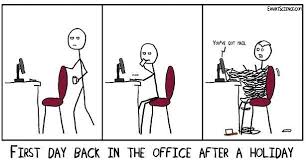
Taking some time off during the Holidays? Looking forward to enjoying some festivities, but dread the mountain of work you know will be waiting when you return? Make a few preparations now before you leave, and follow some tips when you return, to help ease you back into a routine and maybe even stretch your relaxed and festive mood well into the first week or two of the new year!

Taking care of a few things now before you leave, will have you thanking yourself when you come back!!

Notifications: Set up your Out-Of-Office and Voicemail messages now. These are probably the two most overlooked yet simplest tasks to quickly take care of. Many email programs such as Outlook and Gmail will let you schedule the OOO in advance. If your phone system doesn’t allow for advance messaging, write the message out, and have it ready to record quickly. Don’t stress yourself by waiting until 5 minutes before you’re trying to get out the door!

Schedule Meetings: That New Year staff meeting can wait until Tuesday afternoon – 2:30 PM to be exact – after you return. A study by YouCanBookMe shows this to be the very best time to schedule a meeting. Also, don’t forget to schedule a reminder, preferably with a scheduled email, in addition to the popup reminder notification.

While you’re adding meetings to your calendar, I want you to schedule 3 lunches your first week back. As you ease your way back into the routine, time away becomes paramount. Schedule alternate days (I recommend this!) or consecutively, but do it in “ink” and do not allow yourself to cancel.

This becomes all too important, especially with our new work-from-home routines. It can become easy to forget about ourselves because, in our minds, we are already at home and feel guilty if we take any "me" time.

Whether you are returning to the office or multiple zoom meetings, you need to add a 30-minute “catch up” time to your schedule. The purpose is to socialize and catch up with your office pals. Scheduling this time will help avoid unnecessary interruptions.

4377055

Task List: You know I’m all about these lists! Make a complete list of all the projects you are working on, including the ones you’ve been putting on the back burner. Take a few minutes to prioritize everything – use the Eisenhower Matrix found in my 5 Essentials Tips blog to help organize these projects. Your “vacation brain” will thank you when it’s time to jump back into things!

Clean Up Your Desk: Put all tasks away and take the last 20 minutes before you leave to clean up your desk. Put away the files you’ve been working on, put books back where they belong, straighten up the supplies. Take one last look at your returning Task list. Make sure you have only the most urgent and important tasks scheduled your first week back.

holiday email return

Tips for Your Return: Returning to the office has been sometimes compared to getting a root canal! Just the volume of emails alone is enough to make even the bravest quiver!!! Three good rules for returning:

  • Try to stay in a selective stealth mode the first few days back, giving those that “need to know” a heads up about your return.
  • Break the first few days into little chunks. For example, take care of emails and phone calls on the first day, and review reports on day two.
  • Do Not Stay Late! As tempting as it might be, slowly easing back into that full “work late” schedule will help you be more focused and productive.

These are just a few things you can do to help relieve the stress of returning to work after an extended Holiday, with an emphasis on getting out of the office or away from your desk - have lunch with a friend, take a walk – get away for at least 30 minutes.

I’d like to close with one final list, it’s my "To-Don't List":

  • Don’t schedule multiple meetings your first day/week back
  • Don’t set unrealistic deadlines for your first day back
  • Don’t try to do everything the first day back

This will only leave you overwhelmed, underproductive, and put you behind in your work.

Prepare Now for a Stress-Free Return Read More »

Simple Steps To Enjoy Your Vacation Time

qtq80-0HJck2

Take These Simple Steps So You Can Enjoy Your Vacation

Add-a-subheading

Summertime! Vacation time! Many of you are planning your vacations but also worried about what you will be greeted by upon your return. After a relaxing vacation, coming back to a larger than normal workload can be stressful and discouraging.

Whether you’re going for a week or two, or just a few days,  taking care of a few things now, and keeping a positive mindset, can help ease you back into the work routine and may even stretch your “vacay” mood a little longer.

Use the checklist below to prep your office before you leave:

✔️ Automate Your Email

Create Rules to Filter Emails:

Setting up filters to determine which emails should receive priority upon your return is a huge time saver! Gmail allows you to mark which email type, or contact, as important or with a star. You can even color-code your stars in order of priority in the Settings section.

In Outlook, go to “Rules & Alerts”. There you can fully customize how you want your incoming messages to behave. Sending them to a folder or marking as high priority, are just a couple of timesaving filters.

Out of Office Automatic Reply:

First, take time right now to set up your Out-Of-Office and Voicemail message. These are probably the two most overlooked yet simplest tasks to quickly take care of. Outlook’s “Automatic Replies” and Gmail’s Vacation Reply will let you schedule the OOO in advance. Your message can be anything from “I’m outta here!” (not really recommended ????) to something more elaborate with information the sender may need. You can also decide if you want the automatic reply to go to everyone, even those outside your organization, or contact list only.

Most voicemails will let you schedule an outgoing message to run at a specific time, but if your phone system doesn’t allow for advance messaging, write the message out now and have it ready to quickly record.

Remember, the idea of advanced settings is so you don’t stress yourself unnecessarily by waiting until 5 minutes before you’re trying to get out the door!

✔️ Organize Your Calendar Now

Michael Kerr, an international business speaker and author of "The Humor Advantage,” recommends:

"If your work situation permits it, leave a day after you've 'officially' booked off and arrive a day before you've announced your official return. This buys you an extra distraction-free day at both ends of your vacation so that you leave feeling better prepared and more relaxed and return to work without feeling overwhelmed."

 Another wiggle room tip is your catch-up time. I remember returning to the office after I had taken a cruise. Everyone stopped by my desk or caught up with me in the community kitchen and wanted to know all my vacation details. These quick “water cooler” chats quickly morphed into a time vampire! Block about 30 minutes of “catch up” time to socialize and catch up with your office pals. Scheduling this time will help avoid unnecessary interruptions and keep you focused.

Don’t forget your own self-care! Schedule three lunches your first week back. As you ease your way back into the routine, time away becomes paramount. Schedule alternate days (I recommend this!), or consecutively, but do it in “ink”, as these should be non-negotiable.

And finally, don’t schedule any meetings your first day back, preferably keep the entire week clear!

✔️ Prioritize Your Task List:

Make a complete list of all the projects you are working on. Are there any projects that have been on a backburner for over a year, take a good look at it – are you really going to work on them? Can they be delegated or even discarded? Take a few minutes to prioritize everything – use the Eisenhower Matrix to help organize these projects. Your “vacation brain” will thank you when it’s time to jump back into things.

Set up your return task list now for at least the first two days back. When adding tasks, keep it real! Don’t set unrealistic deadlines for your first day back and don’t try to do everything on that first day, this will only leave you overwhelmed, underproductive, and put you behind in your work.

The first day should be sorting through and answering priority emails, just dip your toe in the water, no cannonballs on this day!

Day two should consist of your top three priorities, in order of deadline dates.

✔️ Schedule Social Media Posts

A social media presence is essential for businesses today, and letting it go for even a week,  can send your engagement into a downward spiral. Luckily, there are programs that will allow you to schedule your posts such as Hootsuite and Sendible. You can also schedule posts directly on  your Facebook business page using Publishing Tools.

If you have a lot of customer interaction, you could hire a Virtual Assistant to reply to comments and private messages, and keep the engagement going. Nothing says sloppy business like failing to respond to messages and questions from your followers.

Alternatively, you could post that you are going on vacation and will not be available during this time. If you take this route, I recommend pinning the post to the top of your page, and make sure you set up messenger to respond accordingly.

✔️ Communicate

Get in touch with your clients and let them know you’ll be away. If you’re able, have a backup contact for them in case any urgent needs arise.  Clients will appreciate the high-touch service.

Kerr says:

"Contact any high-priority clients before going to make sure you've answered any questions and addressed their needs before heading out. It's not only a great customer service habit to get into, it will give you greater peace of mind. It also gives you a simple but legitimate excuse to reach out to clients you may not have talked to in a while."

If you work with a team, make sure everyone is aware of your travel plans and how to reach you in case of an emergency.

✔️ Clean Up Your Desk

About 20 minutes before the end of your day, take some time to clean up your desk. Put away the files you’ve been working on, put books back where they belong, straighten up the supplies. Take one last look at your Task list and review this check list to make sure everything is ticked off.

You're Back at Work, Now What?

Part of the lure of a vacation is that you're free to do as you please. Work often seems like the end of the fun part of your vacation. Nonetheless, with a bit of strategic planning, and following a few return tips, you can help relieve the stress of the return and harness the excitement and happiness of your vacation.

Stealth Mode 

Try to stay in a selective stealth mode the first few days back, giving those that “need to know” a heads up about your return.  Break up the first few days into little chunks. For example, take care of emails and phone calls on the first day,  and review reports on day two.

Do Not Stay Late

As tempting as it might be, slowly easing back into that full “work late” schedule will help you be more focused and productive.

Keep the Vacation Alive

You can keep the spirit of your vacation alive by enjoying similar leisure activities on weekends long after you return to work. Have margaritas with dinner occasionally. Tan privately on your patio. Ask your partner for a massage once in a while. And, enjoy the natural beauty that surrounds you. If you look around you, you'll find that total relaxation can be experienced everywhere!

Simple Steps To Enjoy Your Vacation Time Read More »

Establish a Great Home Environment for Success

A Mother's Arms
Add-a-subheading

People read about having a great work environment or an atmosphere at work for success. But if your environment at home is less than optimal, this can affect your work, no matter how great your work environment is.

If you often find yourself fighting with your spouse, or you are constantly yelling at your kids, you may want to refocus your energies and try to rectify what is going on. Your conditions at home are going to affect you in every other aspect of your life. This couldn't be truer today as COVID-19 (Coronavirus) has started a new norm with so many businesses having their employees work from home. This may require some outside assistance, but the first step is recognizing what problems are occurring and try to use that knowledge to come up with a better way.

For some people, there just is no better way. If two people were simply not meant to be, the right choice for them might be to go their separate ways. But even before doing that, it may be worth trying to save the relationship.

Another way to turn around a difficult home situation is to get more involved in what your family is doing. It could be that you’ve been working too many hours, and they are getting frustrated with not being able to see you. Remember, people can find new jobs. It’s really difficult to find new families.

If you have been one to skip vacations instead of work, you should stop doing that. Take your vacations. That’s why companies give them to people. They realize that vacations can be good for employees so you should not feel guilty about taking them yourself. There are sometimes valid reasons not to take a vacation due to a work situation. But it should be postponed, not cancelled entirely.

Consider taking up new hobbies and learning activities with your family. Perhaps you can start hiking to learn more about the area you live in. If you have never taken your family camping, now could be a great time to do so. These kinds of activities can be a great way to reconnect and mend up any tense home situations. Bonus points if you unplug during the camping trip, or any other family activity you choose to do.

Having a happy home environment is going to do wonders for your work. You will burn out less because you have the support of your family, and you will see your productivity soar! It will make you want to be home on weekends and after work. It will reflect well on all of your family members as well.

Establish a Great Home Environment for Success Read More »